


Today, the problem of varicose veins is relevant, as every fourth person faces this disease, which is accompanied by severe symptoms and often leads to a dangerous complication - thrombophlebitis.This article will tell you about highly effective methods for the treatment and prevention of varicose veins.
Varicose veins: causes and symptoms
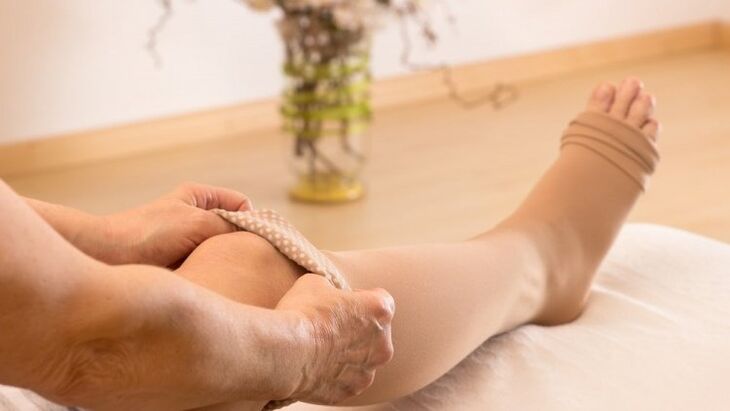
With varicose veins, the functioning of the vessels that carry blood to the heart is impaired.The disease occurs mainly in women over 30 years of age.Due to deformation of the venous vessels and closed valves, the blood cannot circulate normally, which leads to impaired blood flow to the heart.
The following factors can be a prerequisite for the development of a pathological process in blood vessels:
- Genetic predisposition.If one of the parents suffers from varicose veins due to lower valves and weak vessel walls, in 70% of cases the child will inherit this disease.
- obesity.Being overweight increases the risk of developing varicose veins by 35%, because the heavy load disrupts the normal blood flow in the veins of the legs.
- Pregnancy Compression of the retroperitoneal veins by the enlarged uterus and a large volume of circulating blood provoke varicose veins.
- Hormonal changes.The risk of developing varicose veins increases due to hormonal disorders that weaken the muscular system and blood vessels.
- lifestyle.Limiting physical activity (hypodynamia) or staying in static positions for a long time has a negative effect on blood flow.
In addition, the development of varicose veins can be provoked by an unbalanced diet with a shortage of coarse fiber, which leads to atypical changes in the structure of the venous walls.The possibility of developing this disease cannot be ruled out due to wearing form-fitting clothing that compresses blood vessels, as well as against the background of frequent stressful situations, alcohol abuse, smoking and leg injuries.
Symptoms depend on the stage of the disease.Even before visual signs appear, there is a feeling of heaviness in the legs, which is due to normal fatigue.With the progression of varicose veins, a number of pronounced symptoms are observed: pain in the legs, swelling and cramps in the evening, darkening of the color of the skin of the legs, the appearance of seals, telangiectasias (spider veins), local varicose veins of the legs, itching of the skin, which indicates the upcoming development of trophic disorders.Severe cases of varicose veins are accompanied by dizziness, hyperthermia, bleeding from venous nodes, thrombophlebitis, trophic ulcers and phlebothrombosis.
Treatment of varicose veins on the legs
Before prescribing treatment for varicose veins, it is necessary to undergo the following diagnostic procedures: ultrasound scan of the veins of the legs (ultrasound and Doppler), as well as duplex angioscanning, rheovasography.After confirming the diagnosis, depending on the stage of the pathological process, the phlebologist may prescribe:
- Operation using microsurgical techniques.In severe varicose veins, phlebectomy is performed - removal of the affected veins using a minimally invasive method.Laser or radiofrequency coagulation of the veins may also be used.Varicose veins in the initial stage are treated with photocoagulation, and cobwebs are removed with a laser.
- Sclerotherapy is the injection of drugs into the dilated vein that make the vein walls stick together.In this case, the patient wears a compression stocking for about 2 months to form tight adhesions.
- Conservative treatment, which includes taking phlebotonics, antiaggregants, antioxidants, anticoagulants and other drugs.This method is suitable in the preoperative period and when surgical removal of the veins is impossible.
During the treatment and after the procedures for a month, doctors recommend not lifting heavy objects, wearing compression stockings and elastic bandages, as well as reducing static loads.At the first symptoms of varicose veins, you should contact a phlebologist to avoid the development of a pathological process leading to serious complications.
Disease prevention

In order to prevent the pathology in question and alleviate the initial symptoms, it is necessary to observe the basic rules of prevention:
- Exercise regularly, swim and move more.An active lifestyle helps to strengthen the venous walls and improve blood circulation.
- Do not overdo it with hot baths, sun exposure and saunas.Excessive exposure to heat reduces the tone of the leg veins and leads to blood stagnation.
- Giving up bad habits is an effective prevention of varicose veins.Many cardiovascular diseases are associated with unlimited consumption of alcohol and smoking.
- Do a warm-up during work associated with constant static loads.For example, if your professional activity requires constant sitting in front of a computer, you can walk in place, squat and stretch your legs every hour for 10 minutes.
- Wear comfortable, non-tight clothing so as not to press on the leg veins, disrupting blood circulation.You should also not wear shoes with a heel higher than 5 cm every day.
- Try to keep your weight normal or normalize it through diet.
- Take a contrast shower to improve blood circulation, massage your thighs, legs and feet.In a lying position, more often raise your legs 15 cm above the body.
A balanced diet is also an excellent prevention of varicose veins.To avoid disorders of venous and vascular blood flow, it is necessary to include foods rich in fiber in the diet and limit salt intake.For those at risk, experts recommend eating radishes, raspberries, carrots, rice, wheat and buckwheat porridge more often.In general, if you follow all the rules of prevention, you can avoid the development of varicose veins even with a hereditary predisposition.